Colors › Types of color blindness
Achromatopsia and monochromacy
Achromatopsia is complete color blindness: the world in light and shade only. It is very rare, about 1 in 30,000 people, and quite unlike red-green color blindness, because the cones that see color do not work at all.
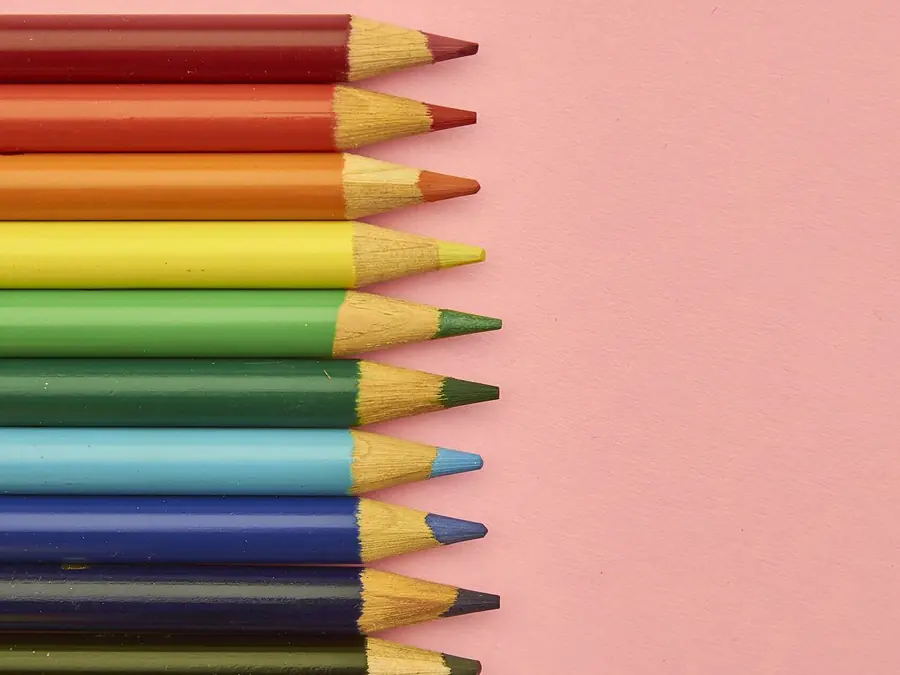 Typical
 Mono
What it is
In complete achromatopsia, also called rod monochromacy, none of the three kinds of cone works. Vision comes from the rods, the cells the eye uses in dim light. That brings more than the loss of color:
- Bright light is dazzling. Rods are made for the dark, so daylight can be overwhelming, and dark tinted glasses help a lot.
- Sharpness is lower, because the cones normally handle fine detail.
- The eyes often move involuntarily (nystagmus), from early childhood.
Achromatopsia is inherited: a child gets it when both parents carry the same altered gene. On the Pacific island of Pingelap, where one ancestor carried the gene, several percent of people have it, a story told in Oliver Sacks's book "The Island of the Colorblind".
Other kinds of monochromacy
- Blue cone monochromacy: only the blue-sensitive cones work. It is passed on through the X chromosome, affects about 1 in 100,000 people, nearly all of them men, and leaves a little color vision in some lighting.
- Cerebral achromatopsia: a loss of color vision caused by damage to the part of the brain that processes color, for example after a stroke. It is very rare.
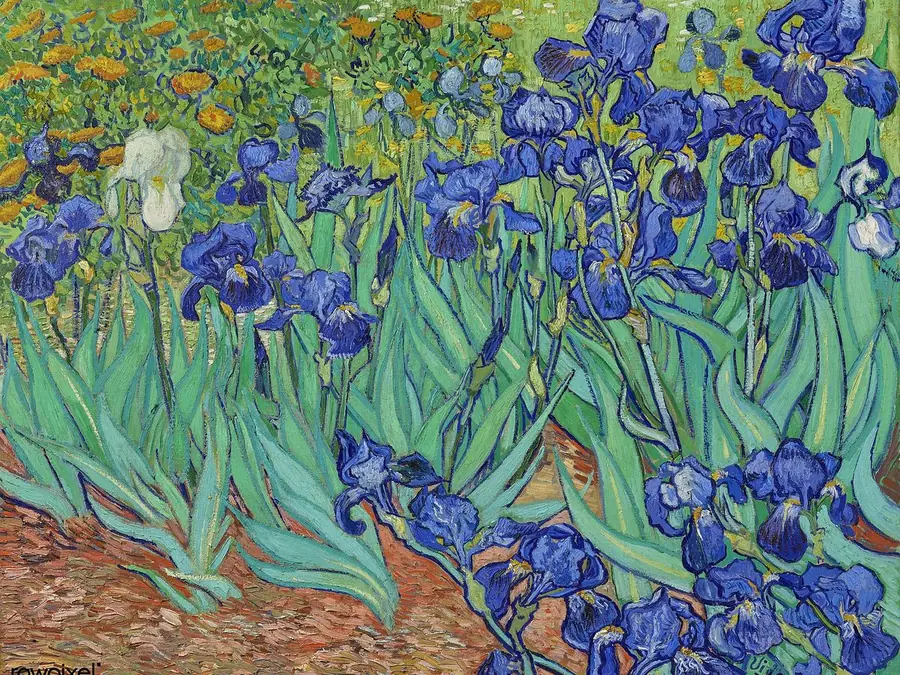 Typical
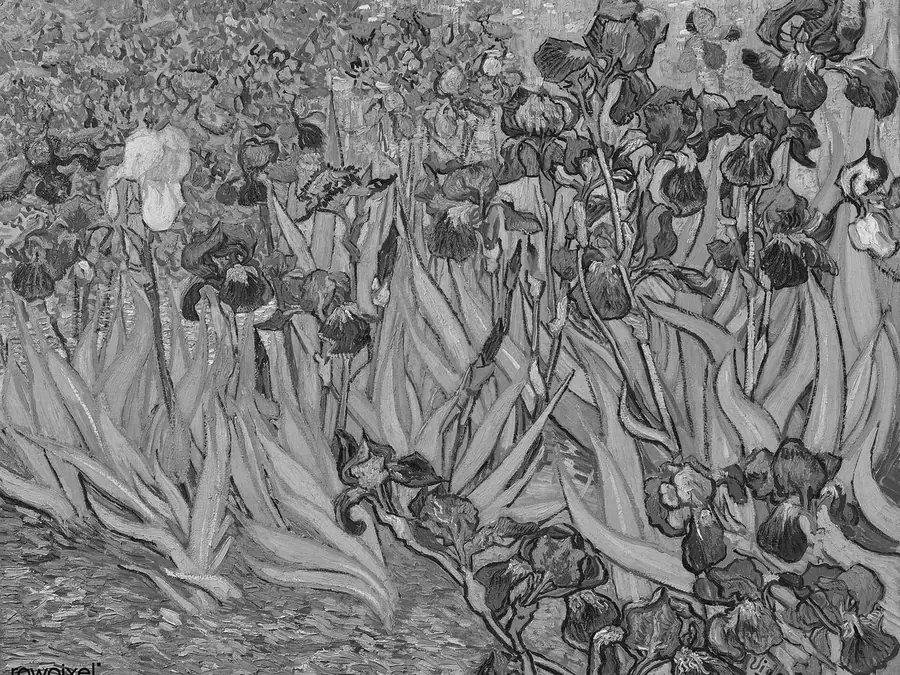 Mono
What the world looks like
Without color, things are told apart only by how light or dark they are. A red apple and the green leaves around it can be the same gray, and so can a ripe and an unripe tomato. The pictures here show that part. They cannot show the glare and the softer detail that come with it.
Living with it
People with achromatopsia rely on tinted lenses, magnifiers, contrast and labels. Researchers are studying gene therapies, but there is no standard treatment yet that restores color vision.
Questions
- Do people with achromatopsia see in black and white? In shades of gray, yes. Colors are told apart only by their lightness.
- Is achromatopsia the same as color blindness? It is the rarest and most complete form. Most color blindness is red-green and leaves plenty of color.
- How common is achromatopsia? About 1 in 30,000 people. Blue cone monochromacy is rarer still, at about 1 in 100,000.
- Why does bright light bother people with achromatopsia? Their vision runs on rods, which are built for dim light and are overwhelmed by daylight.