Colors › Types of color blindness
Deuteranopia and deuteranomaly
Deutan color blindness, often called green-weak or red-green color blindness, is the most common kind by far. It comes from the cones most sensitive to green light. In deuteranomaly they respond to slightly the wrong colors. In deuteranopia they are missing.
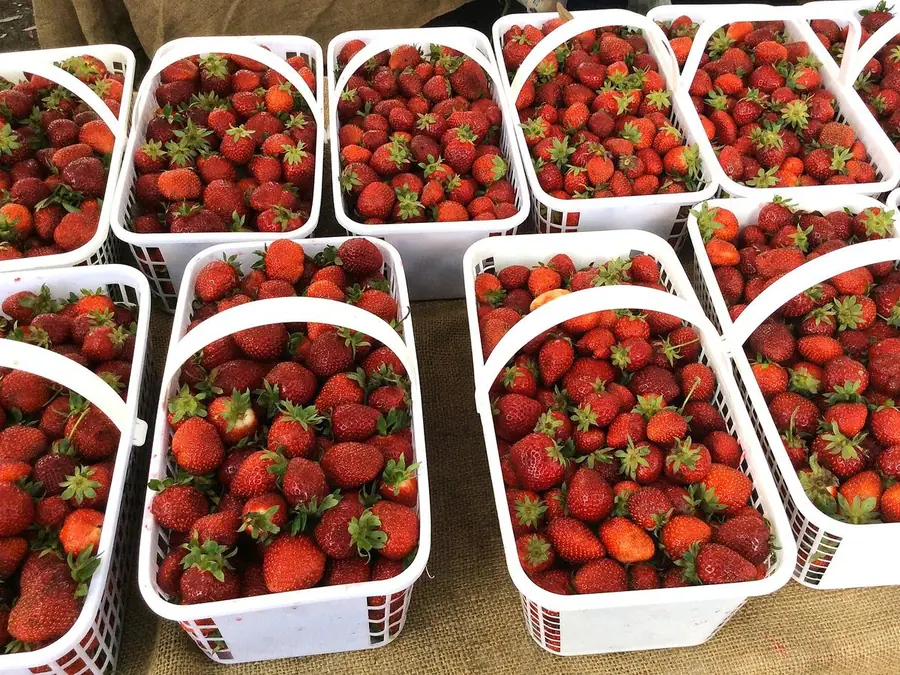 Typical
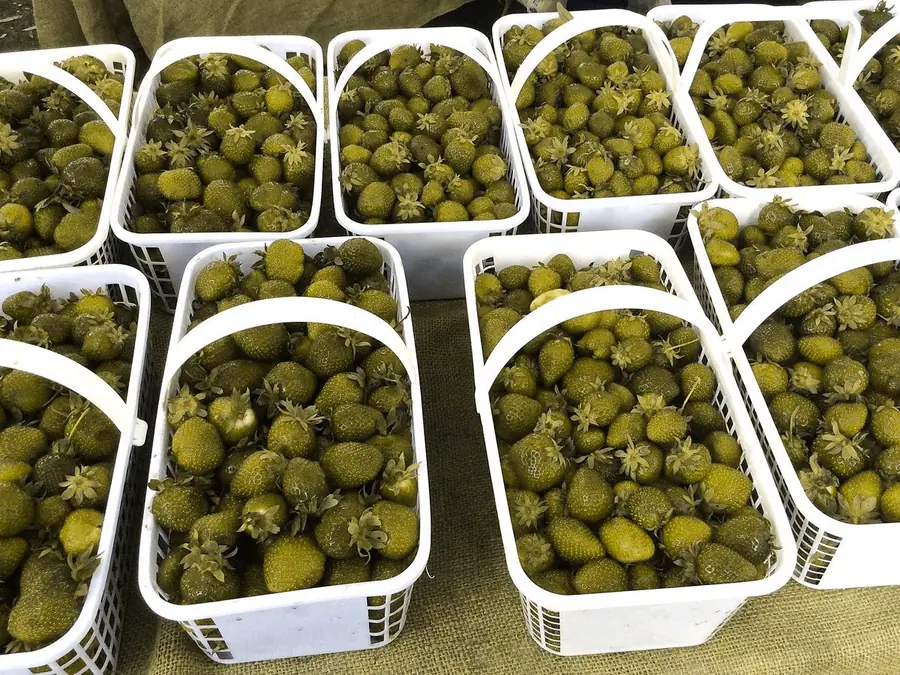 Deutan
What changes
Reds, oranges, yellows, greens and browns lie along one line of colors, and in deutan vision the colors along that line move toward each other.
- Red and green can look alike, especially when they are about as bright as each other. Ripe fruit hides among the leaves.
- Green, orange, yellow and brown blend: autumn trees, a forest path, khaki and olive clothes.
- Purple loses its red and looks blue. Pink can look gray.
- Blue and yellow stay clear, which is why many deutan people describe the world as mostly blues and yellows.
Unlike protan vision, reds keep their brightness: a red light looks as bright as it does to anyone, just not as distinctly red.
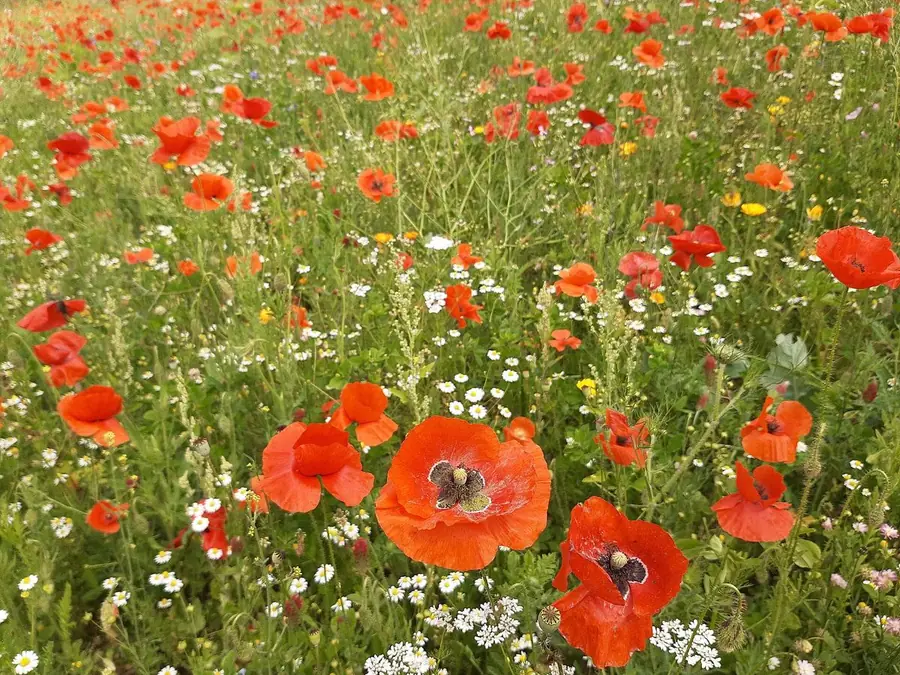 Typical
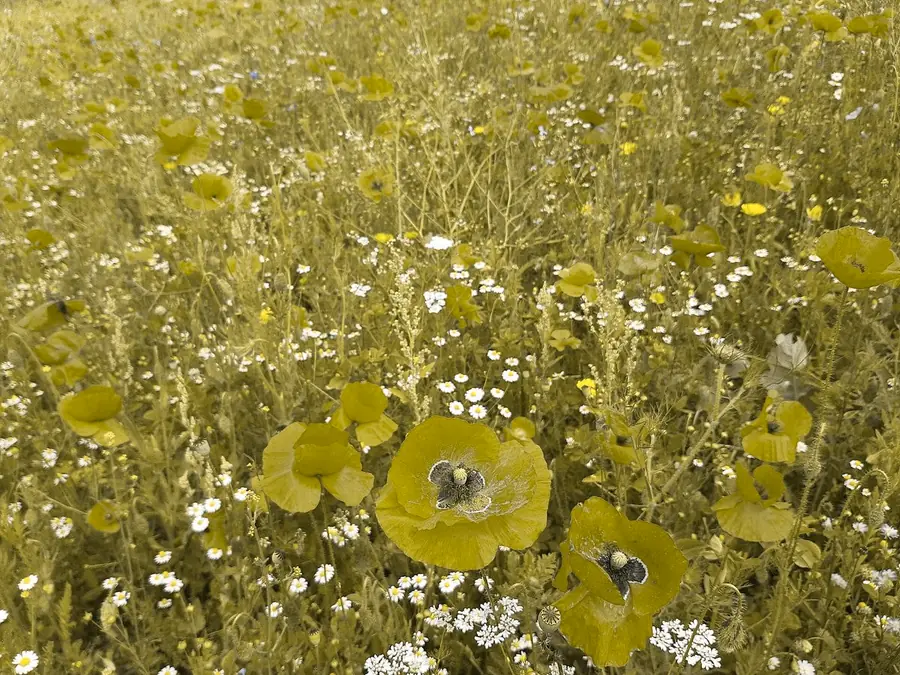 Deutan
Deuteranomaly or deuteranopia
Deuteranomaly is the milder form, though it ranges from barely noticeable to strong. The green cones are there, but their sensitivity is shifted toward red, so reds and greens are harder to tell apart without being identical. About 5 in 100 men have it, and many only find out in a school or job screening.
Deuteranopia is the complete form: no working green cones, so the colors along that line look the same. About 1 in 100 men have it.
The strength slider in Colors runs from the one to the other.
How common is it?
About 6 in 100 men and around 1 in 250 women of Northern European descent have deutan color vision, more than every other kind put together. Because the gene is on the X chromosome, it usually passes from a mother who carries it to her son.
Everyday life
- Traffic lights are read by position: red on top, green at the bottom.
- Cooking: whether meat is done, or a banana ripe, is hard to judge by color. A thermometer is more reliable anyway.
- Charts, maps and status lights that rely on red against green: labels, patterns and shapes help.
- Clothes: greens, browns and grays, or navy and purple, are easy to mix up. Many deutan people ask someone, or label their wardrobe.
- Work: a few jobs, such as pilot or train driver, check color vision before hiring.
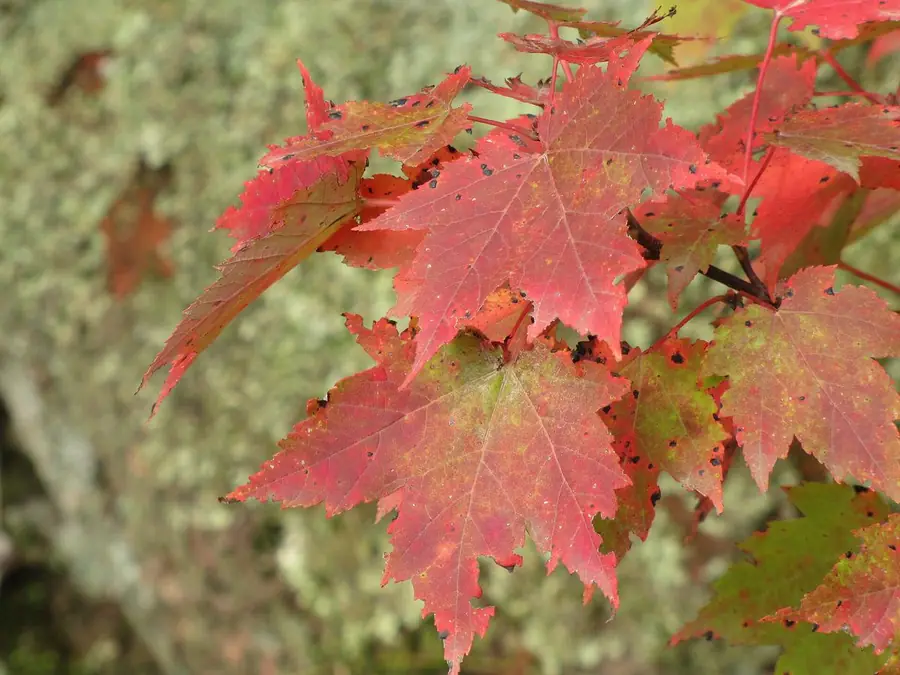 Typical
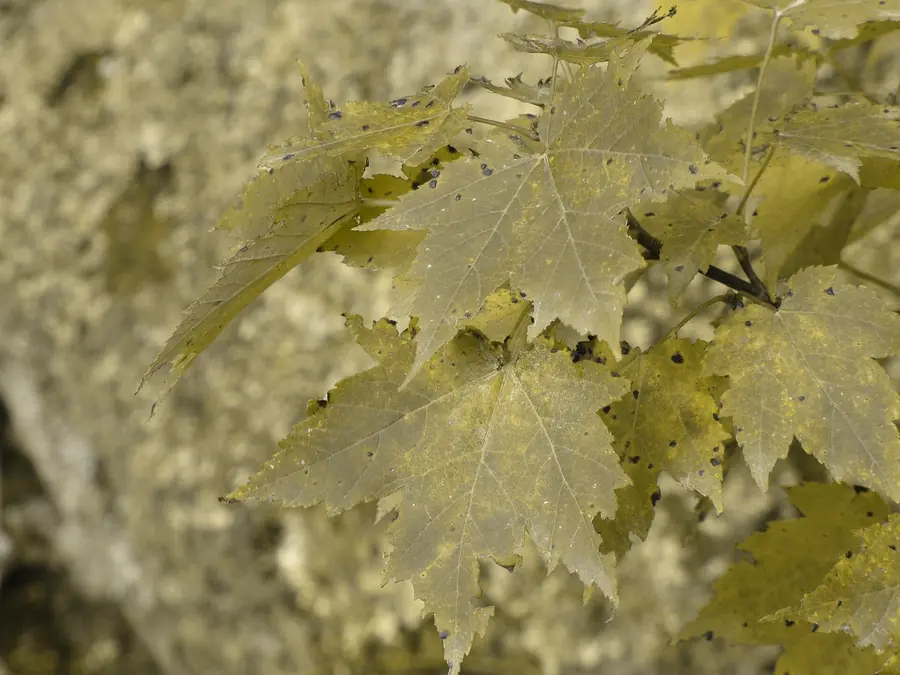 Deutan
Seeing it for yourself
The pictures on this page are simulations, made with the model of Machado, Oliveira and Fernandes (2009) that Colors uses everywhere. They show which colors merge for a typical deuteranope. Colors for iPhone does the same live, through your camera.
Curious about your own color vision? The free test on this site shows which pattern your answers most resemble. It is a game, not a diagnosis.
Take the free color blind test
Questions
- Is deuteranopia red or green color blindness? It is a green-cone type, but red and green are the colors it confuses, so it counts as red-green color blindness.
- Do people with deuteranopia see green? They see colors they call green and learn the names from context, but greens, yellows, oranges and reds fall into a much narrower range for them.
- Can deuteranopia be cured? Inherited color blindness has no cure today. Some tinted glasses make certain colors stand out more for some people, but they do not create the missing cone signal.
- What is the difference between deutan and protan? Both confuse reds and greens. In protan vision reds also look darker; in deutan vision they keep their brightness.